
Red light therapy works on a timeline of weeks to months, not days. Cleveland Clinic says treatment can mean being seen one to three times a week for “weeks or even months.” One randomized trial measured skin changes after about 15 weeks of twice-weekly sessions. At RedLight Freedom in Glen Allen, our plans run 90 days for that reason.
So if you’re wondering how long red light therapy takes to work, here’s the honest answer: longer than a weekend, shorter than forever. This guide walks through what researchers have measured, why consistency matters more than any single session, and what a 90-day plan can look like when you track your progress instead of guessing.
What the research says about timelines
Let’s keep the research voice separate from the studio voice. Here’s what published sources say.
Cleveland Clinic describes red light therapy as a series of visits over time: “one to three times a week for weeks or even months.” It also notes that results vary from person to person. Its summary of the evidence is measured: studies so far show some potential for certain conditions, and more research is needed. (Cleveland Clinic, reviewed December 2021)
A randomized, controlled skin study is one of the clearer looks at timing. In 2014, researchers in Germany treated 113 volunteers twice a week with red light (611-650 nm) or a broader 570-850 nm spectrum. They compared them with 23 controls. After 30 sessions, which is about 15 weeks at that pace, the treated groups showed improvements in skin complexion, skin roughness, and ultrasound-measured collagen density compared with controls. (Wunsch and Matuschka, 2014)
In plain English: measurable changes showed up after months of steady, twice-weekly sessions, not after a handful.
A few honest limits on that study. It looked at skin appearance, not pain, weight, or any other goal. It tested two specific light sources, and the authors are affiliated with a light-consulting company, so it doesn’t prove every device performs the same way. And it measured the group at the end of treatment, so it can’t tell us the exact week the first change began.
Dosing research is still unsettled. A 2020 scoping review of low-level laser therapy for neuromusculoskeletal conditions found that studies varied so much in dose and schedule that the authors called the ideal dosing uncertain. (Taylor et al., 2020) So nobody can promise you a precise “week six” milestone, and we won’t.
Why sessions are spaced, not stacked
You might think more light, faster, is the shortcut. Researchers have seen a different pattern in lab and animal work. It’s called a biphasic dose response: low-to-moderate light doses show stimulating effects, while very high doses can lose the benefit. One review noted that pattern when the number of treatments was varied in mice, not just the strength of each one. (Huang et al., 2011)
That research is early, and mice aren’t people. But it fits the practical advice at the heart of our plan: steady beats frantic. Spacing your visits gives you a routine you can keep. It also keeps you inside the measured range we recommend.
Why the habit matters as much as the light
Here’s a number worth knowing, and it has nothing to do with light. Researchers followed 96 volunteers as they tried to turn a daily behavior into a habit. The time it took to feel automatic ranged from 18 to 254 days, which is a very wide gap. They also found that missing a single opportunity didn’t materially hurt the process. (Lally et al., 2010)
That study looked at everyday behaviors like eating, drinking, and exercise, not red light therapy. But it’s a useful reality check for any wellness routine. Real results usually need real time. And if you miss a week, you haven’t ruined anything. You pick it back up.
The RedLight Freedom plan: 90 days
This section is our studio’s approach, not a research finding. It comes from how we run the Freedom Method with clients in Glen Allen.
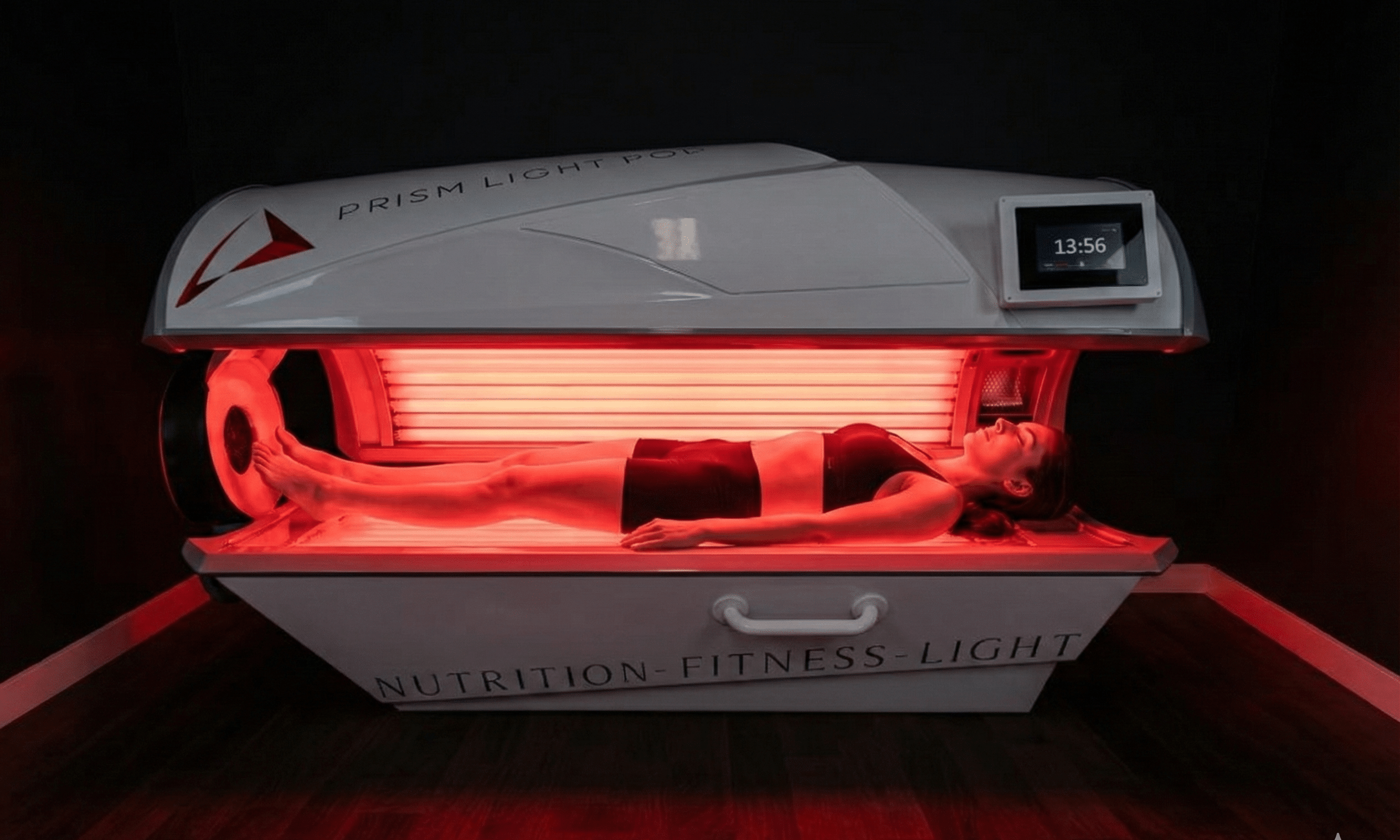
Our plans are 90 days long. We recommend one to three sessions per week, and we keep it to no more than three a week. The fullest version of the plan is three sessions a week for the full 90 days. If life gets in the way and you miss a few visits, your plan simply takes a little longer to finish. Every visit pairs a whole-body session in the Prism or Renu Light Pod with a 10-minute session on the vibration plate, and we build a nutrition and lifestyle plan around it.
Here’s the shape of a plan. Your consultation tailors it to you.
- The start: your baseline. Your first visit includes a consultation, body measurements, and an InBody 380 scan, so you start with real numbers. Then the goal is simple: pick days you can protect and show up.
- The middle: keep your rhythm. This isn’t the stretch where you chase a dramatic before-and-after. It’s where the routine becomes a habit.
- The evaluation: review the numbers. At the end of your plan, you and your specialist compare a new InBody scan and your measurements against your starting point, and decide what comes next. Our longest plan adds a mini evaluation partway through, so you get a midpoint look too.
We don’t promise specific results. Individual results vary, and red light therapy is a wellness service. It isn’t a medical treatment, and it doesn’t replace care from your doctor.
How to track progress so you aren’t guessing
A 90-day plan only works if you can see whether it’s working. Three simple tools help:
- Body measurements and InBody scans. An InBody scan estimates your skeletal muscle and body-fat percentage, which the scale can’t separate. For comparisons that mean something, scan at a similar time of day and prep the same way each time. We explain how in our guide to what an InBody scan measures. Research on InBody analyzers shows consistent readings, which is why they suit tracking your own trend. (McLester et al., 2020)
- A short weekly note. Two lines on your energy, sleep, and mood. Memory is a poor tracker, and a note makes the trend obvious.
- Your attendance. Count your sessions. A plan you completed gives you a clearer answer than one you attended half the time.
If you’re newer to all this, our first session checklist covers what to bring and what to expect. To sort out how many visits per week fit your life, see how often to use red light therapy.
What to expect at RedLight Freedom in Glen Allen
Our studio is on Nuckols Road in Glen Allen, an easy trip from Short Pump, Innsbrook, and Richmond’s West End. A regular visit takes about 30 minutes: 15 minutes in the Prism or Renu Light Pod, 10 minutes on the vibration plate, and a couple of minutes to change. Your first visit runs longer, because it includes the consultation, measurements, and your InBody baseline. See everything included on our What We Offer page, or compare the options in our red light therapy cost guide.
Frequently asked questions
How long does red light therapy take to work?
Think weeks to months. Cleveland Clinic describes treatment as one to three sessions a week for “weeks or even months,” and a controlled skin study measured changes after 30 twice-weekly sessions, about 15 weeks. Results vary from person to person.
How many sessions of red light therapy do I need?
At RedLight Freedom, our plans are 90 days long and we recommend one to three sessions a week, no more than three. Studies use many different schedules, so we don’t claim a single research-proven number of sessions.
Will I notice anything after one session?
A single session isn’t how we measure progress. We look at your numbers and how you feel over weeks.
What if I miss a week?
Pick up where you left off. Habit research found that missing one opportunity didn’t materially affect the process, so one skipped week doesn’t undo your plan.
Can I speed things up by coming more often?
We keep our recommendation at no more than three sessions a week. More light on a tighter schedule isn’t a proven shortcut, and a routine you can sustain gets you further.
Is red light therapy a replacement for medical care?
No. It’s a wellness service that can be one part of a broader routine alongside sleep, nutrition, movement, and care from your healthcare team. It isn’t intended to diagnose, treat, cure, or prevent any disease.
Give it a fair 90 days
The evidence points the same way our experience does: good routines take weeks to build, and the most useful progress is the kind you can measure. If you want a plan with a real starting line and a clear checkpoint, book your first visit. We’ll scan, walk through your results, and map out your first 90 days.
Sources
- Cleveland Clinic. Red Light Therapy. Page last updated 2021-12-01. Accessed 2026-10-02.
- Wunsch A, Matuschka K. A controlled trial to determine the efficacy of red and near-infrared light treatment in patient satisfaction, reduction of fine lines, wrinkles, skin roughness, and intradermal collagen density increase. Photomed Laser Surg. 2014;32(2):93-100. PMID 24286286.
- Taylor DN, Winfield T, Wynd S. Low-Level Laser Light Therapy Dosage Variables vs Treatment Efficacy of Neuromusculoskeletal Conditions: A Scoping Review. J Chiropr Med. 2020. PMC7729198.
- Huang YY, Sharma SK, Carroll J, Hamblin MR. Biphasic dose response in low level light therapy – an update. Dose Response. 2011;9(4):602-18. PMID 22461763.
- Lally P, van Jaarsveld CHM, Potts HWW, Wardle J. How are habits formed: Modelling habit formation in the real world. Eur J Soc Psychol. 2010;40(6):998-1009.
- McLester CN, Nickerson BS, Kliszczewicz BM, McLester JR. Reliability and agreement of various InBody body composition analyzers as compared to dual-energy X-ray absorptiometry in healthy men and women. J Clin Densitom. 2020. PMID 30472111.