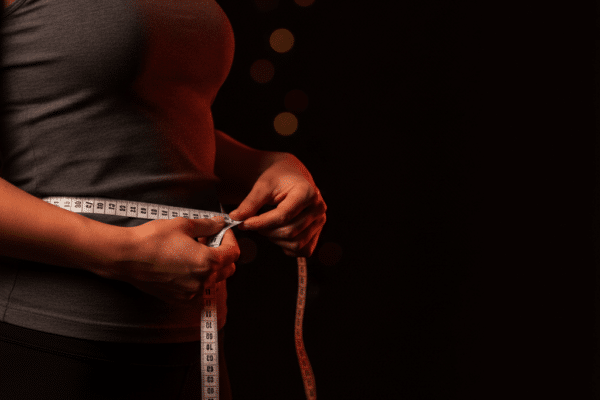

When people say they have “stubborn fat,” they usually mean an area that has not changed the way they hoped despite real effort. That frustration is understandable. It is also where wellness marketing can get loud fast.
Red light therapy has a place in the conversation, but it deserves a straight answer. It is not a weight-loss drug, surgery, or a replacement for food, movement, sleep, and medical care. The research around low-level light is more specific: some studies have found temporary reductions in circumference in treated areas under particular protocols. That is different from promising a certain number on the scale or a permanent spot-reduction result.
At RedLight Freedom, that distinction matters. Our approach pairs a 15-minute whole-body pod session with a vibration plate session, a starting InBody scan, and practical nutrition support. The goal is to give you a repeatable routine and a way to measure your own progress honestly.
Start with the right question
The better question is not, “Will one light session melt fat?” It is, “Can consistent light therapy support the plan I am already willing to follow?”
The FDA describes non-invasive body contouring as changing the appearance or circumference of a body area without surgery. It also makes an important distinction: these procedures do not treat obesity, do not produce weight loss, and do not provide the health benefits associated with weight loss. For low-level light therapy specifically, the FDA says it may temporarily reduce circumference in a treated area. FDA body-contouring guidance
That keeps expectations grounded. A tape measure, how clothing fits, and an InBody estimate can be useful ways to observe a trend. None is a diagnosis, and none should replace a conversation with your healthcare provider about weight, medications, hormones, metabolic concerns, or a changing health condition.
What the research actually studied
The body-contouring research is encouraging in places, but it is not one universal protocol that applies to every device, person, or goal.
A 2009 randomized, controlled study used a 635 nm low-level laser three times a week for two weeks. The treatment group showed a larger combined circumference change across the waist, hips, and thighs than the sham group. The study also recorded a small rebound at the two-week follow-up. That is a useful signal, but it is not proof that every kind of red light, every treatment schedule, or every person will see the same result. Read the study on PubMed
A newer systematic review identified only three randomized controlled trials, totaling 160 participants. It found measurement changes across the included studies, while also noting that the protocols and follow-up periods differed enough to make the best long-term approach uncertain. Read the 2025 review on PubMed
Another clinical trial studied phototherapy alongside exercise training in women with obesity. Both groups exercised; the group receiving phototherapy had larger changes in several body-composition and metabolic measurements. That design is a useful reminder of the role light therapy may play: an add-on to a broader routine, not the routine by itself. Read the trial on PubMed
Why “stubborn” needs a practical plan
You cannot choose where your body changes first. Genetics, life stage, sleep, stress, activity, food patterns, medications, and health conditions can all affect what you notice in the mirror or on a tape measure. A promise to erase one area is not an honest one.
What you can control is the process:
- Choose a baseline. Start with the same type of measurement each time. At RedLight Freedom, the first visit includes an InBody 380 body-composition scan, which is an estimate—not a medical diagnostic—but it gives you a consistent reference point.
- Make the routine realistic. A 15-minute full-body red light session and an included vibration plate session fit more easily when they support the movement and meals you can repeat at home.
- Track a trend, not a single day. Hydration, meal timing, clothing, and normal fluid shifts can change a measurement. Compare like with like over several weeks.
- Keep the foundations in view. Nutrition, regular activity, sleep, and stress management still carry the load for health and sustainable weight change. Light is an adjunct, not a shortcut around those basics.
How the RedLight Freedom experience fits
RedLight Freedom is built around more than lying in a pod. A typical visit includes a whole-body session in the Prism or Renu Light Pod, followed by a 10-minute vibration plate session. The first visit also provides a baseline InBody scan, and the Freedom Method connects that data to practical nutrition, hydration, sleep, and movement habits.
That structure is deliberate. We do not want you guessing from day to day or chasing a dramatic before-and-after promise. We want you to understand what you are tracking, use the session as a consistent part of your wellness routine, and decide from your own progress whether the plan is useful for you.
If you are local to Colonial Heights, the Tri-Cities, or the Richmond area, you can learn how a first visit works before booking. For the broader overview of both pods, the vibration plate, and InBody scans, visit What We Offer.
A simple way to judge whether it is helping
Before you sign up for any body-contouring or wellness service, ask four questions:
| Question | A grounded answer looks like |
|---|---|
| What outcome is being discussed? | A specific appearance or circumference goal, not a promise of medical weight loss. |
| What does the research measure? | The actual study outcome, treatment schedule, and follow-up period—not a headline stripped of context. |
| What else supports the plan? | Food, movement, rest, hydration, and a measurement routine you can maintain. |
| How will I know if it is working for me? | A baseline, repeatable check-ins, and room for individual results to vary. |
This approach takes a little more patience than a flashy promise. It also helps you spend your time and money with your eyes open.
Frequently asked questions
Can red light therapy make me lose weight?
Red light therapy is not a weight-loss treatment. The FDA distinguishes non-invasive body contouring from weight loss and obesity treatment. Some research looks at temporary circumference changes or body-composition measures, especially when light therapy is paired with exercise, but results vary.
Can it target belly fat or another specific area?
No service can honestly promise to choose where your body changes first. Research on low-level light has measured specific areas such as the waist, hips, and thighs, but the outcomes are protocol-specific and are not a guarantee of spot reduction for an individual.
How many sessions does it take to see a change?
Research protocols have varied from several sessions over two weeks to ongoing programs alongside exercise. The most useful answer comes from your own consistent check-ins over time, not from a single-session promise.
Is the InBody scan a medical diagnosis?
No. The InBody 380 provides a body-composition estimate that can be useful for tracking a trend. It does not diagnose disease or replace medical care.
Who should speak with a healthcare provider first?
Anyone with a medical condition, pregnancy or planned pregnancy, photosensitivity, an implant, a history of cancer at the treatment area, or medications that may affect light sensitivity should discuss new wellness treatments with a qualified healthcare provider. The FDA lists additional considerations for low-level light procedures. Review the FDA guidance
The honest bottom line
Red light therapy may be a useful part of a consistent wellness routine when your goal is to track body-composition or circumference changes without surgery. The evidence points to possible, typically modest measurement changes under specific protocols—not a promise of dramatic scale loss or permanent spot reduction.
If that is the kind of measured approach you want, book a first visit at RedLight Freedom. We will walk you through the pod, vibration plate, InBody baseline, and a realistic way to track your own progress.
Sources
- U.S. Food and Drug Administration. Non-Invasive Body Contouring Technologies. Accessed 2026-08-20.
- Jackson RF, et al. Low-level laser therapy as a non-invasive approach for body contouring: a randomized, controlled study. Lasers in Surgery and Medicine. 2009.
- Low-level laser therapy for reducing body circumferences: a systematic review. 2025.
- da Silveira Campos RM, et al. The effects of exercise training associated with low-level laser therapy on biomarkers of adipose tissue transdifferentiation in obese women. Lasers in Medical Science. 2018.