Why light matters so much for sleep
Your brain doesn’t check a phone clock to know what time it is. It watches light.
Bright light in your eyes says, “Be awake.” Darkness says, “Start winding down.”
This 24-hour internal timing system is called your circadian rhythm.
It influences when you feel alert, when you feel sleepy, how you digest food, and even
how your body handles inflammation and recovery.
The problem: modern life layers on late-night screens, indoor days, and shift work.
Your brain gets mixed signals — bright light at night, not enough light in the morning —
and sleep starts to feel fragile or unpredictable.
How light “talks” to your internal clock
When light hits the back of your eye, special cells signal a tiny region in your brain
called the suprachiasmatic nucleus (SCN). That cluster is your master clock.
- Bright morning light tends to shift your rhythm earlier and helps you feel alert.
- Strong light at night (especially blue-rich) can delay your rhythm and make it harder to fall asleep.
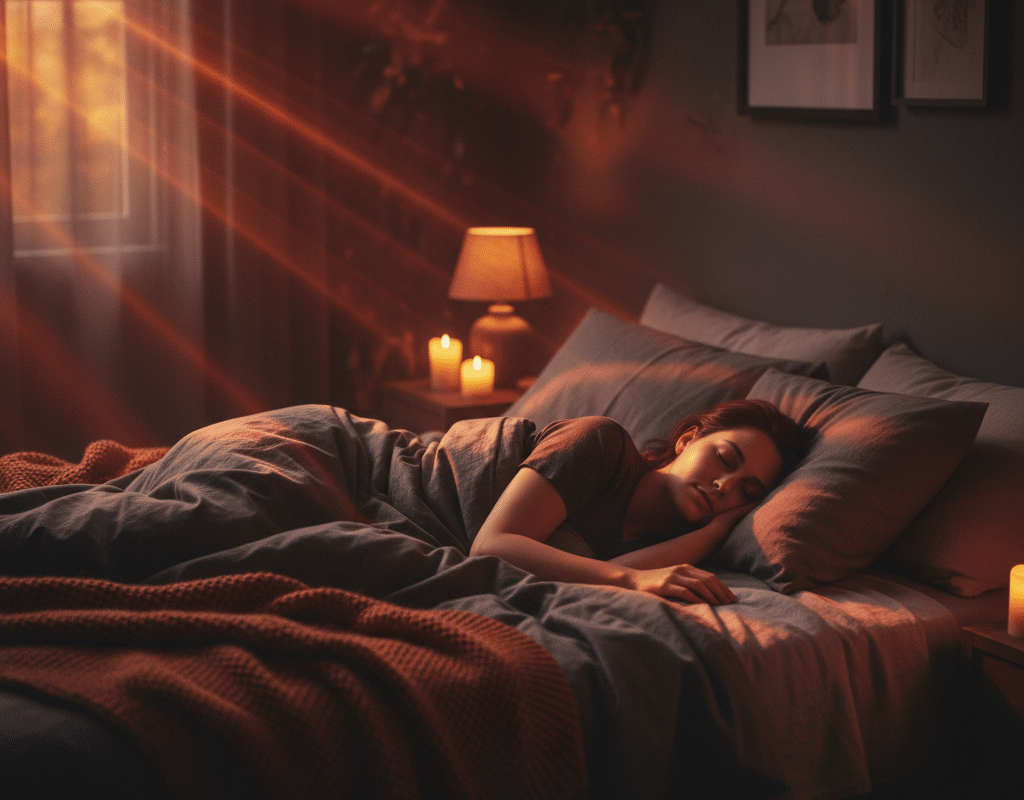
- Dim, warm light at night usually interferes less with melatonin and wind-down.
Red and near-infrared light sit at the low-energy end of the spectrum. They interact more
with how your cells make energy and handle stress than with the “stay awake” signal that
bright white or blue light sends.
Where red light fits in the sleep picture
Red light therapy is not a sleeping pill and not a blue-light blocker. Instead, the evidence
mostly points to supporting recovery, inflammation control, and possibly sleep quality
in some contexts — especially when combined with good habits.
Studies suggest red or near-infrared light can influence:
- Cellular energy (ATP) — how efficiently cells make and use fuel.
- Inflammation and soreness — which can affect how comfortable you feel at night.
- Blood flow — potentially affecting muscle relaxation and recovery.
That doesn’t mean “turn the pod on and your insomnia disappears.” It means red light may
become one part of a plan that includes light hygiene, movement, and bedtime routines.
A simple day of light for better nights
General guidance (not medical advice) often looks like this:
-
Morning: get bright natural light in your eyes within the first 1–2 hours
of waking if possible. Outdoors beats indoors. - Daytime: keep rooms reasonably bright. Take short “light breaks” outside if you work inside.
-
Evening: dim overhead lights 1–2 hours before bed. Shift screens warmer or use apps that
reduce blue-heavy light. -
Night: aim for a dark room. If you must have a light on, a small, dim warm source
interferes less than a bright white or blue one.
At RedLight Freedom, many guests pair an early-evening session with a calmer, screen-light-limited
wind-down to support both recovery and sleep.
Using the red light pod when sleep is a goal
If your main interest in red light therapy is sleep or mood, we walk through a few questions first:
- Are you dealing with shift work, kids, or chronic stress that disrupts schedule?
- Do you have a fairly consistent wake time, or is it all over the place?
- Are pain, stiffness, or recovery issues part of what keeps you up?
Based on that, a typical plan might involve:
- Sessions earlier in the day if you’re extremely sensitive to light or stimulation at night.
-
Late-afternoon / early-evening sessions for guests whose main problem is soreness, tension,
or feeling “wired but tired.” - Pairing sessions with walks, stretching, or breathing work instead of heavy screen time.
You stay in the pod for about 15 minutes of light. Our focus is to make the room calm,
predictable, and quiet enough that your nervous system can actually settle.
Where clients see the best results
Red light therapy works best as part of a complete sleep strategy. The clients who report the biggest improvements are the ones who also:
- Work with their doctor or sleep specialist when a condition like sleep apnea is involved.
- Reduce screen exposure in the 1–2 hours before bed.
- Address stress, schedule consistency, and overall sleep hygiene alongside their sessions.
Our goal is to help you use light more intelligently as one part of a plan that actually works long-term.
Red light therapy works alongside your existing care
Many of our clients use red light sessions as a complement to care they’re already
receiving — especially for conditions like sleep apnea, chronic pain, or mood concerns.
Red light therapy has an excellent safety profile and doesn’t interfere with most
treatments. We’re happy to coordinate and keep your session plan aligned with what
your healthcare provider recommends.
Further reading: light, sleep, and circadian rhythm
These independent resources explain how light affects sleep and health in more detail.
We encourage you to compare their guidance with anything you see online about red light therapy.