By August, your skin has stories to tell. The afternoon at the beach. The Saturday on the boat. The lawn that took twice as long as you thought it would. None of it felt dangerous at the time — that’s the trick with sun damage, it adds up quietly — and by the time you notice the dullness, the new spots, or the fine lines that weren’t there last spring, the damage has already been compounding for weeks.
Sunscreen is the first answer, and a good one. But sunscreen is a shield, not a repair tool. Once UV exposure has happened, your skin needs help putting itself back together — and that’s where red light therapy for sun damage comes into a smart summer plan.
Here’s what the research actually shows about photobiomodulation and post-sun skin recovery, why the wavelengths matter, and how the whole-body Prism Light Pod at our Colonial Heights studio fits into the picture.
What sun damage actually is
There are two flavors of UV, and they wreck your skin in different ways.
UV-A (320–400 nm) is the slow one. It penetrates deep into the dermis, generates reactive oxygen species, damages mitochondrial DNA, and quietly activates the enzymes (matrix metalloproteinases, or MMPs) that break down your collagen and elastin. That’s where photoaging comes from — the deep lines, the loss of firmness, the leather-y texture that shows up after years of “I didn’t even burn.”
UV-B (290–320 nm) is the loud one. It causes the surface damage you can see — sunburn, redness, peeling — and the DNA damage in skin cells that the body has to repair every time.
Conventional dermatology recommends sunscreen, retinoids, and time. That’s good advice for prevention and surface turnover. What it doesn’t really address is the active repair side: how to nudge the damaged dermal layers to rebuild collagen, calm the post-UV inflammation, and reverse the photoaging trajectory at the cellular level. That’s where red light therapy earns its place in the toolkit.
What the research shows about red light therapy and sun damage
The evidence for photobiomodulation on photoaged skin is some of the most established in the field.
A 2014 controlled trial of 113 participants in Photomedicine and Laser Surgery compared red light (611–650 nm) and red plus near-infrared protocols across 30 sessions. The treated groups showed significant improvements in skin complexion, feeling, intradermal collagen density (measured by ultrasound), and reduced wrinkles compared to controls (Wunsch & Matuschka, 2014).
A 2009 study by Barolet and colleagues in the Journal of Investigative Dermatology found that 660 nm LED therapy stimulated fibroblast collagen synthesis and reversed photoaging markers in human skin biopsies — direct evidence that red light is doing what we say it’s doing at the cellular level, not just looking good in before/after photos (Barolet et al., 2009).
A separate randomized split-face trial of 76 participants using 633 nm and 830 nm LED therapy across 12 weeks reported that 91% of participants saw improved skin tone and 82% saw softening of wrinkles, with objective skin-roughness measurements confirming the subjective results (Lee et al., 2007).
On the post-UV inflammation side, Barolet and Boucher’s 2008 work in Lasers in Surgery and Medicine showed that LED pre-treatment reduced UV-induced erythema by approximately 50% — and a related thread of research has found similar reductions in post-procedure redness after dermatologic laser treatments (Alster & Wanitphakdeedecha, 2009). The takeaway: red light meaningfully calms the inflammatory response that drives a lot of the visible damage.
Honest caveat before we move on: for deep solar lentigines (the dark spots that show up after years of sun) or established melasma, red light alone is a moderate adjunct rather than a primary treatment. Modalities like IPL, fractional laser, or topical regimens (tretinoin, hydroquinone, tranexamic acid) work more directly on pigment. Red light therapy doesn’t bleach melanin — its benefit on pigmented changes is mostly downstream, via inflammation reduction and dermal repair (Kim et al., 2020). For lingering deep spots, a dermatologist is part of the plan. For everything else — the texture, the collagen, the dullness, the new lines — red light is in the right neighborhood.
The wavelengths that matter — and why
When researchers run the photoaging trials we just cited, they’re not testing a particular brand. They’re testing a wavelength range — the specific bands of light that fibroblasts and dermal cells actually respond to. The studies converge on two windows:
- 620–680 nm in the red spectrum for surface and mid-dermal effects — fibroblast stimulation, collagen synthesis, epidermal repair
- 800–880 nm in the near-infrared range for deeper penetration into the dermis where solar elastosis lives
Those aren’t arbitrary. They match the absorption peaks of cytochrome c oxidase, an enzyme deep in the mitochondrial respiratory chain. When that enzyme absorbs the right light, it speeds up ATP production — meaning your skin cells have more energy for the slow, expensive work of rebuilding collagen, modulating inflammation, and clearing out the damage UV left behind (Hamblin, 2017).
The Prism Light Pod at RedLight Freedom delivers 630 nm and 660 nm red plus 850 nm near-infrared across more than 17,000 medical-grade LEDs. Those are the exact wavelengths the published research has used — applied to your entire body, head to feet, in a single 15-minute session. Your face, your décolletage, your forearms, the backs of your hands — every spot where the sun has been all summer gets exposed at once.
That whole-body coverage matters more for sun damage than for almost any other use case. UV doesn’t politely stay on your face. Neither should your recovery protocol.
Sun damage is whole-body — the RedLight Freedom approach
Most red light research on photoaging has been done with targeted face panels. That works — and it informs everything we do — but a panel approach forces you to choose which sun-exposed areas get attention. The Prism Pod flips that. In one session, your face, neck, chest, shoulders, forearms, and hands all get the same therapeutic wavelengths simultaneously. Those secondary areas — the ones nobody covers with a face mask but everyone exposes to the sun — finally get the same support your face gets.
Our protocol: up to 2 sessions per week. Not daily, not 5×/week. The Prism Light Pod is a medical-grade, FDA-cleared Class II device, and more isn’t automatically better — photobiomodulation follows a biphasic dose-response curve, meaning the right dose helps and too much reduces the effect. Twice-weekly sessions through the summer is where most of our clients start noticing visible changes: dullness lifts first, skin tone evens out across the second month, fine lines soften across months two and three.
Two sessions a week sounds conservative compared to studies that ran 3–5 sessions weekly in clinical settings. Here’s why we take that approach: the Pod’s medical-grade output delivers significantly more energy per session than the smaller consumer panels used in much of the research. Twice weekly with our equipment is calibrated to where the curve helps, not where it tips into diminishing returns.
A note on timing: red light therapy works alongside your sun protection, not instead of it. Keep using sunscreen. Sunscreen is the shield. The Pod is the repair shift. Both are part of a summer-smart plan.
What a session looks like at RedLight Freedom
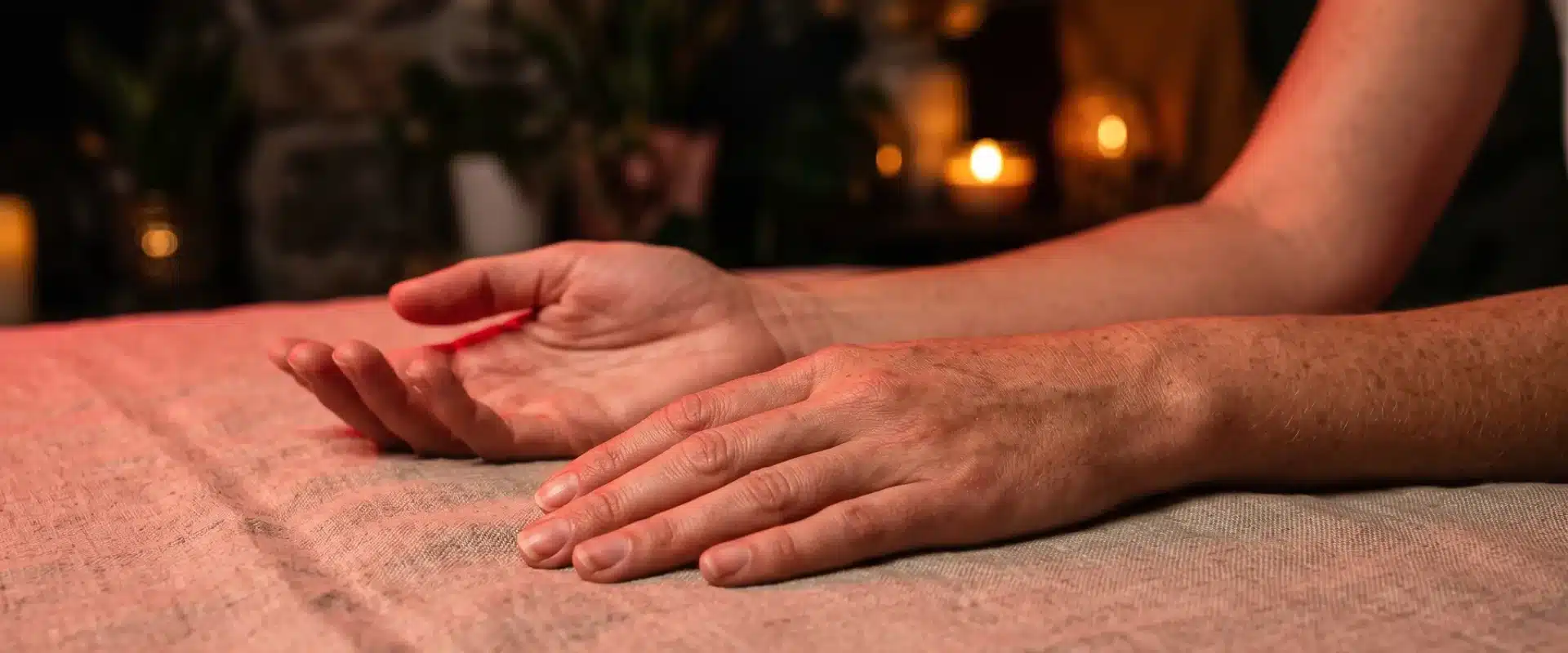
You’ll come into our Colonial Heights studio — quiet, private, no rush. You’ll wear eye protection. You’ll lie down inside the Prism Light Pod, which looks like a sleek clamshell bed lined with 17,000+ LEDs. The session runs 15 minutes. The light covers you head to toe. No UV, no harsh heat, no prep beyond removing makeup if you’d prefer the cleanest skin contact.
Most people describe sessions as warm, quiet, and surprisingly restorative. Some fall asleep.
Your first session is $99 (regularly $299). That includes the full 15-minute Pod session, an intake conversation about what you’re hoping to address (summer-specific protocols welcomed), and a plan for how often to come back. No upsell, no script.
We’re at 2903 Boulevard, Suite B in Colonial Heights, open Tuesday through Saturday, 9 AM to 5 PM. Book at redlightfreedom.com or call (804) 689-2200.
Frequently asked questions
Can I do a red light session the same day I’ve been in the sun?
Yes — once your skin has cooled and there’s no active sunburn or stinging. Wait at least a few hours after intense sun, longer if you’re noticeably pink. We don’t run sessions on acutely burned skin — wait until the redness and heat have settled (usually 48–72 hours) before booking.
Does red light therapy replace sunscreen?
No, and don’t let anyone tell you otherwise. Sunscreen is your primary defense against UV damage. Red light therapy is repair-side — it helps your skin recover from exposure that already happened. They work together as a pair, not as alternatives.
Will red light therapy fade my sun spots?
For mild, recent pigmentation changes, you may see gradual evening of skin tone over consistent sessions. For deeper solar lentigines (the established dark spots from years of sun) or true melasma, red light is a useful adjunct but not the most direct tool — modalities like IPL, fractional laser, or specific topical regimens from a dermatologist tend to work more directly on pigment. If you’re working on spots specifically, we’ll point you toward the right combination.
The takeaway
Sun damage doesn’t undo itself. Your skin can recover — at the dermal layer where it actually matters — but the body needs the right inputs to do that work. Red light therapy at the studied wavelengths is one of the few wellness practices with real research behind it and direct evidence on photoaging recovery.
Paired with daily sunscreen, consistent hydration, and the occasional dermatologist visit for whatever the Pod isn’t built for, twice-weekly Pod sessions through the summer become a meaningful part of how your skin makes it to fall in better shape than it ended last summer.
If that’s the kind of recovery plan you’re after, your first session at RedLight Freedom is $99. Call (804) 689-2200 or book online. We’ll take it from there.
Related reading
- Home Panel vs. Professional Pod
- How We Read the Red Light Research
- Your First Red Light Session: What to Expect in 15 Minutes
- Red Light Therapy for Skin Confidence
- Red Light vs Tanning Beds
Sources
- Wunsch A, Matuschka K. A Controlled Trial to Determine the Efficacy of Red and Near-Infrared Light Treatment in Patient Satisfaction, Reduction of Fine Lines, Wrinkles, Skin Roughness, and Intradermal Collagen Density Increase. Photomedicine and Laser Surgery. 2014. https://pubmed.ncbi.nlm.nih.gov/24286286/
- Barolet D, Roberge CJ, Auger FA, Boucher A, Germain L. Regulation of skin collagen metabolism in vitro using a pulsed 660 nm LED light source: clinical correlation with a single-blinded study. Journal of Investigative Dermatology. 2009. https://pubmed.ncbi.nlm.nih.gov/19536267/
- Lee SY, Park KH, Choi JW, et al. A prospective, randomized, placebo-controlled, double-blinded, and split-face clinical study on LED phototherapy for skin rejuvenation. Journal of Photochemistry and Photobiology B. 2007. https://pubmed.ncbi.nlm.nih.gov/17566756/
- Barolet D, Boucher A. LED photoprevention: reduced MED response following multiple LED exposures. Lasers in Surgery and Medicine. 2008. https://pubmed.ncbi.nlm.nih.gov/18649378/
- Alster TS, Wanitphakdeedecha R. Improvement of postfractional laser erythema with light-emitting diode photomodulation. Journal of Cosmetic and Laser Therapy. 2009. https://pubmed.ncbi.nlm.nih.gov/19811085/
- Avci P, Gupta A, Sadasivam M, et al. Low-level laser (light) therapy (LLLT) in skin: stimulating, healing, restoring. Seminars in Cutaneous Medicine and Surgery. 2013. https://pubmed.ncbi.nlm.nih.gov/24049929/
- Hamblin MR. Mechanisms and applications of the anti-inflammatory effects of photobiomodulation. AIMS Biophysics. 2017. https://pubmed.ncbi.nlm.nih.gov/28748217/
- Kim HJ, Choi MS, Bae IH, et al. The effect of red light-emitting diode irradiation on melasma. Lasers in Medical Science. 2020. https://pubmed.ncbi.nlm.nih.gov/31933015/
- Cleveland Clinic. Sun Damage. 2023. https://my.clevelandclinic.org/health/diseases/sun-damage
- World Association for Photobiomodulation Therapy (WALT). Position Paper on Cancer Safety in PBM. 2022.