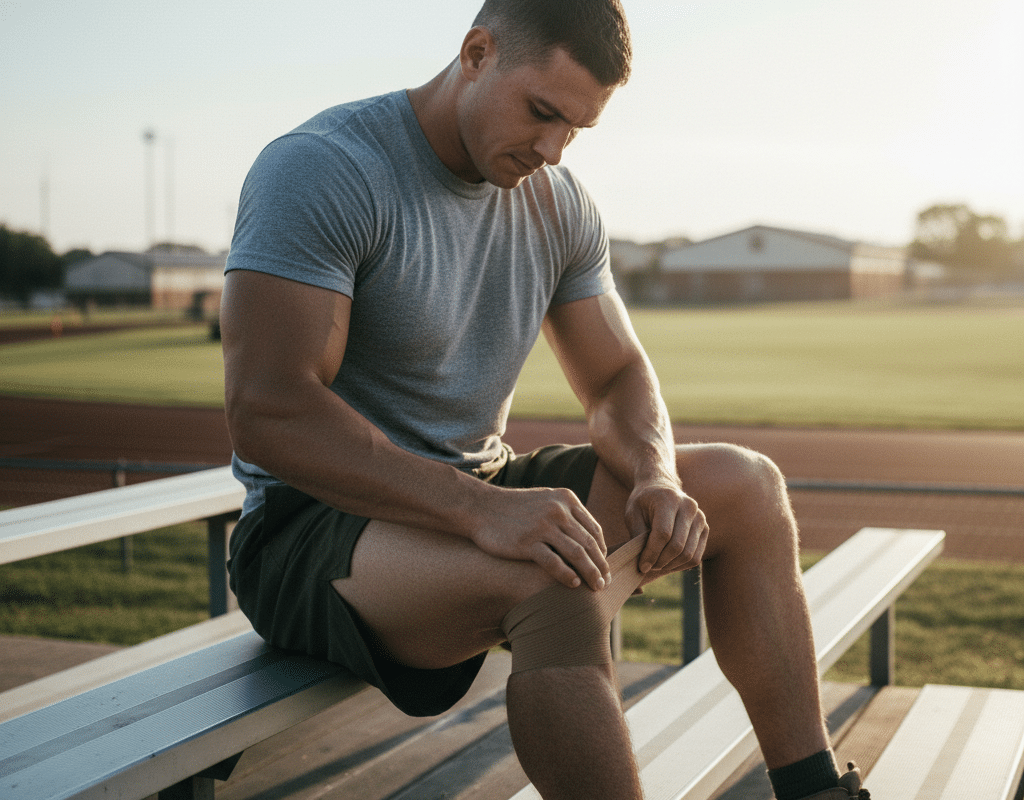
The numbers that don’t make the news
When people think about military injuries, they picture combat wounds. The
Department of Defense tracks a different reality.
1.6 million musculoskeletal injuries occur across the DoD every
year, generating over 2.4 million medical visits annually. Over
95% of these injuries are musculoskeletal — not combat
wounds. The damage comes from overuse, ruck marches, repetitive PT, and the
relentless physical demands that define military life.
More than half of all active component soldiers sustain at least one injury
every year. These injuries account for roughly 60% of limited duty
days and 65% of soldiers unable to deploy for medical
reasons. Direct patient care costs alone run $548 million
annually — and that doesn’t count the toll on readiness,
careers, and quality of life.
At Fort Lee — just minutes from our studio in Colonial Heights —
soldiers, veterans, and military families are living these numbers every day.
Where the damage shows up
A 12-year study published in Military Medicine (2024) tracked injury
patterns across the U.S. Army from 2010 to 2021. The breakdown is consistent
year after year:
-
Lower extremities: 42% of all mechanical injuries —
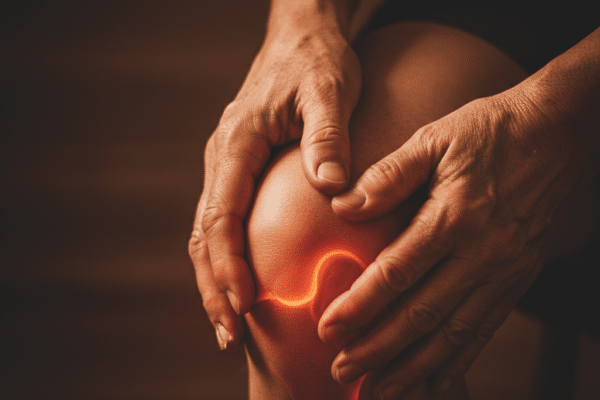
knees are the single most common site. Among Army trainees, lower extremity
injuries account for 75% of all musculoskeletal injuries. -
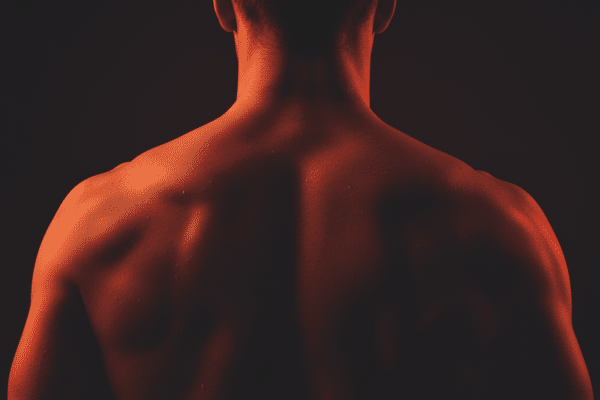
Spine and back: 28% — driven by rucksack loading,
vehicle vibration, and high-volume PT. -
Upper extremities: 20% — shoulder injuries from
overhead tasks, rucksack straps, and repetitive load-bearing.
Over 70% are overuse injuries — cumulative microtrauma
from months and years of physical stress, not a single acute event. That
matters because overuse injuries respond differently than acute trauma. They
need consistent recovery support, not just rest and ice.
What the research shows: red light therapy for military injuries
Photobiomodulation (PBM) — the clinical term for red and near-infrared
light therapy — has been studied for several of the exact injury types
the military tracks. Here are three studies with direct relevance to the
Fort Lee community.
Plantar fasciitis: VA-validated RCT (2024)
Plantar fasciitis is an epidemic among infantry and long-march soldiers.
A 2024 randomized controlled trial by Ketz et al. used the Defense
and Veterans Pain Rating Scale (DVPRS) — a pain tool built
specifically for military patients:
- Three groups: usual care only vs. usual care + PBM at two power levels
- Both PBM groups received 9 sessions over 3 weeks at 10 J/cm²
- Both PBM groups achieved clinically meaningful pain
reduction throughout the protocol - At 13- and 26-week follow-up, PBM participants reported a
2-point decrease on the DVPRS — classified as patients
rating their pain as “much better” - The usual-care-only group showed no improvement at any
time point
This wasn’t a wellness study — it was a military medicine RCT using
the VA’s own pain scale, and the results held for six months.
Rotator cuff recovery: PBM + rehabilitation (2025)
Shoulder injuries are the most common upper extremity concern in the
military — driven by rucksack straps, overhead tasks, and repetitive
load-bearing. A 2025 study treated 20 patients with confirmed rotator cuff
pathology (bursitis, tendinitis, partial and full-thickness tears) using PBM
combined with exercise-based rehabilitation over 6 weeks:
- Significant pain reduction on the Numeric Pain Rating Scale
- Meaningful functional recovery in shoulder range and daily tasks
A systematic review by Castaldo et al. (2023) confirmed that PBM plus
therapeutic exercise achieves significant decreases in pain and
improved shoulder function across multiple studies.
Pre-exercise protection: buffering the damage before it happens (2024)
A 2024 systematic review and meta-analysis (19 studies, 672 participants)
found that PBM applied before exercise significantly reduces
post-exercise muscle soreness — a mean difference of
−12.27 points on standard pain scales.
For soldiers whose daily life includes PT, ruck marches, and field exercises,
this means a pre-workout session in the Prism Light Pod may help
buffer muscle damage before it accumulates — addressing
the overuse cycle at its source.
What the research shows: whole-body vibration for recovery
At RedLight Freedom, every session includes time on a whole-body
vibration (WBV) plate after the Prism Light Pod. This isn’t a
gimmick — it’s backed by research that specifically targets the
injury sites the military tracks.
Chronic low back pain: systematic review + meta-analysis (2023)
Back injuries account for 28% of all Army mechanical injuries. A 2023
systematic review and meta-analysis found:
- Both WBV and local vibration therapy reduced chronic low back
pain - WBV was superior to control in improving lumbar
dysfunction (measured by the Oswestry Dysfunction Index) - WBV outperformed local vibration for functional improvement
A related 2024 systematic review across 12 RCTs and 821 patients confirmed
these findings — whole-body vibration consistently improved both pain
scores and functional outcomes in chronic low back pain.
Military foot march study: WBV for march-related back pain
An Auburn University RCT studied WBV specifically in the context of a
military foot march:
- Three groups: WBV + exercise, exercise only, and control
- Measured low back pain during and after an 8-kilometer foot march
- WBV decreased low back pain by increasing core muscle activation
and proprioception
This study used a military foot march as the outcome measure. For Fort Lee
soldiers who ruck regularly, that’s about as directly relevant as
research gets.
Knee osteoarthritis: WBV as rehabilitation adjunct (2025)
Knees are the single most common injury site in the military lower extremity
data. A 2025 meta-analysis published in PLOS ONE evaluated WBV
training as an adjunct to conventional knee OA rehabilitation:
- WBV + rehabilitation exercise outperformed rehabilitation
alone - Comprehensive analysis across 8 databases through February 2024
For soldiers and veterans dealing with knee pain from years of running,
jumping, and load-bearing — the vibration plate is a research-supported
recovery tool that addresses the military’s most common injury site.
How we combine both at RedLight Freedom
When you come in for a session, the flow is designed to let each tool build
on the other:
-
Step 1 — Prism Light Pod (15 minutes): Full-body red
and near-infrared light (630–850 nm) delivers energy to muscles,
tendons, joints, and fascia. We select a preset based on your goals —
the Sports Recovery and Chronic Pain
Management programs are the most common choices for military clients. -
Step 2 — Whole-body vibration plate (5–10 minutes):
Low-intensity vibration supports lymphatic flow, circulation, and
core activation — helping your body process the cellular
changes the pod just initiated.
PBM research shows increased benefit when tissues have enhanced circulation
during and after treatment. The vibration plate supports that process —
creating a combined protocol based on physiological rationale and what we see
working with our clients week after week.
The broader picture: PBM and cognitive recovery research
For service members dealing with the invisible wounds of service, there’s
encouraging research happening at the VA level. VA-funded studies at the
Boston Healthcare System have explored transcranial
photobiomodulation — light applied directly to the scalp —
for veterans with chronic traumatic brain injury:
- Neuropsychological scores improved in 40% of subscales tested
- Regional cerebral blood flow increased in 67% of participants
- Veterans reported improved executive function, verbal memory, and sleep
quality (+1 hour per night on average) - A larger RCT with 160 Gulf War veterans is currently underway
Worth knowing: These studies use specialized transcranial
devices designed to deliver light directly to brain tissue — a different
application from the whole-body Prism Light Pod. Our pod focuses on
musculoskeletal recovery: muscles, joints, tendons, and fascia. But the
underlying science is shared — both work through mitochondrial ATP
production and inflammation reduction. As this research continues to advance,
it strengthens the broader evidence base for photobiomodulation as a recovery
tool.
You’re already neighbors
Fort Lee sits directly alongside the Tri-Cities — Petersburg, Colonial
Heights, and Hopewell. RedLight Freedom is in Colonial Heights,
minutes from the base gates. Military families living
off-post in Colonial Heights, Hopewell, Chester, and the surrounding counties
of Chesterfield, Dinwiddie, and Prince George are already in our service area.
This isn’t a generic “we support veterans” statement.
We’re your neighbors. We understand what Fort Lee puts a body through
— the sustainment training, the field exercises, the physical demands
that don’t stop when the workday ends. And we’ve built a recovery
protocol that the research supports and our clients keep coming back for.
What to expect at your first session
Your first visit at RedLight Freedom is structured and calm — not
rushed or confusing:
-
Consultation: We sit down, review your goals and any
injuries or medical considerations, and select the right pod preset for you. -
Prism Light Pod: 15 minutes of full-body red and
near-infrared light in a private room. You control the environment —
door locks from inside, fan keeps you comfortable. -
Vibration plate: A few minutes on the WBV platform to
support circulation, lymphatic flow, and core activation. -
Check-in: We ask how you feel, answer questions, and build
your ongoing plan based on your response.
Most military clients notice reduced stiffness, improved mobility, and a
calmer feeling after their first session. The deeper benefits — pain
reduction, recovery speed, and sustained energy — build over consistent
use, typically 2–3 sessions per week.
Frequently asked questions
Can active-duty soldiers come in for sessions?
Yes. Active-duty service members, reservists, military spouses, and veterans
are all welcome. We recommend booking ahead for first-time consultations, but
walk-ins are welcome when the schedule allows. Our studio in Colonial Heights
is minutes from the Fort Lee gates.
Does TRICARE or VA insurance cover red light therapy?
Currently, most insurance plans — including TRICARE — do not cover
red light therapy sessions. However, some clients use HSA or FSA funds for
their visits. We keep our pricing straightforward: $79 for your first visit
(consultation + full session), $299 for regular sessions.
How many sessions before I notice a difference?
Most clients notice improved mobility and reduced stiffness after their first
session. For deeper goals like chronic pain relief, sustained recovery, or
injury rehabilitation support, consistent sessions over 4–6 weeks
deliver the most noticeable results. We recommend 2–3 sessions per week
as a starting point.
Is red light therapy safe alongside physical therapy or other treatments?
Yes. Red light therapy has an excellent safety profile and works well as a
complement to physical therapy, chiropractic care, and medical treatment. Many
clients use it alongside their existing recovery plan. We’re happy to
coordinate with your PT or healthcare provider.
Sources & further reading
The studies referenced in this article:
-
Ketz et al. (2024) — PBM for Plantar Fasciitis (IJSPT, PMID 38179590)
-
PBM + Exercise for Rotator Cuff Pathology (2025, PMC12079619)
-
WBV for Chronic Low Back Pain — Systematic Review (2023, PMC10523661)
-
Naeser et al. — Transcranial PBM for Veteran TBI (2019, PMID 31050928)
-
Military Medicine — 12-Year MSKI Study (2024)